Epoxy floor repair and recoating in Vienna starts with diagnosis, not a replacement quote: bond testing across the floor, the cause of each failure named, and an honest verdict on what can be saved.
Epoxy Floor Repair and Recoating in Vienna, VA by Vienna Epoxy Flooring Company
Most Floors Do Not Need to Die
A peeling, worn, or blistered epoxy floor provokes two bad quotes in this town: the full replacement sold on sight, and the cheap recoat rolled over a failing bond. Both waste money, in opposite directions, and both start by skipping the only step that matters.
Diagnosis is that step. We test the bond across zones, read the failure patterns the way they deserve, and price the repair the floor actually needs: section rebuilds where the bond has let go, preparation and a fresh topcoat where the system underneath is sound.
What a Repair Scope Includes
A Vienna repair project is built from the diagnosis outward:
Bond testing across the floor, zone by zone
A written diagnosis naming the cause of each failure
Cut out and rebuild of sections whose bond has failed
Full preparation of sound areas for a fresh topcoat
Photographs at diagnosis and handover for your records
Diagnosis Before Prescription
Failure patterns testify. Tire lane peeling over a sound field points to heat and a thin original coat; blistering in patches points to moisture; wear without peeling points to a topcoat that simply finished its service. Each cause has a different repair, and pricing follows the diagnosis, not the other way around. We photograph the floor at diagnosis and at handover, so if a repaired section ever misbehaves, the record shows what was there and what was done.
Recent Project: Garage Floor Recoat in Lakevale Estates
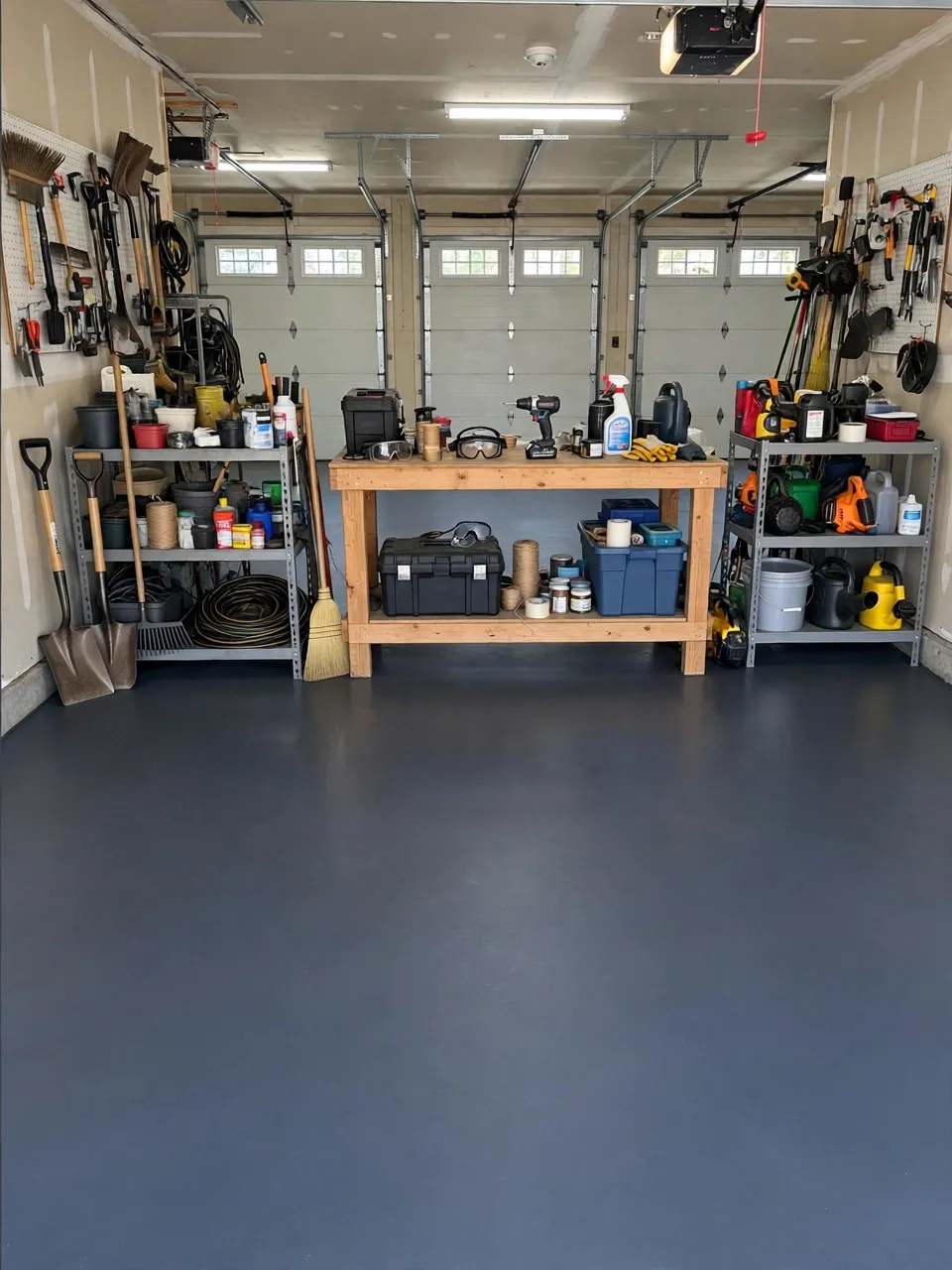
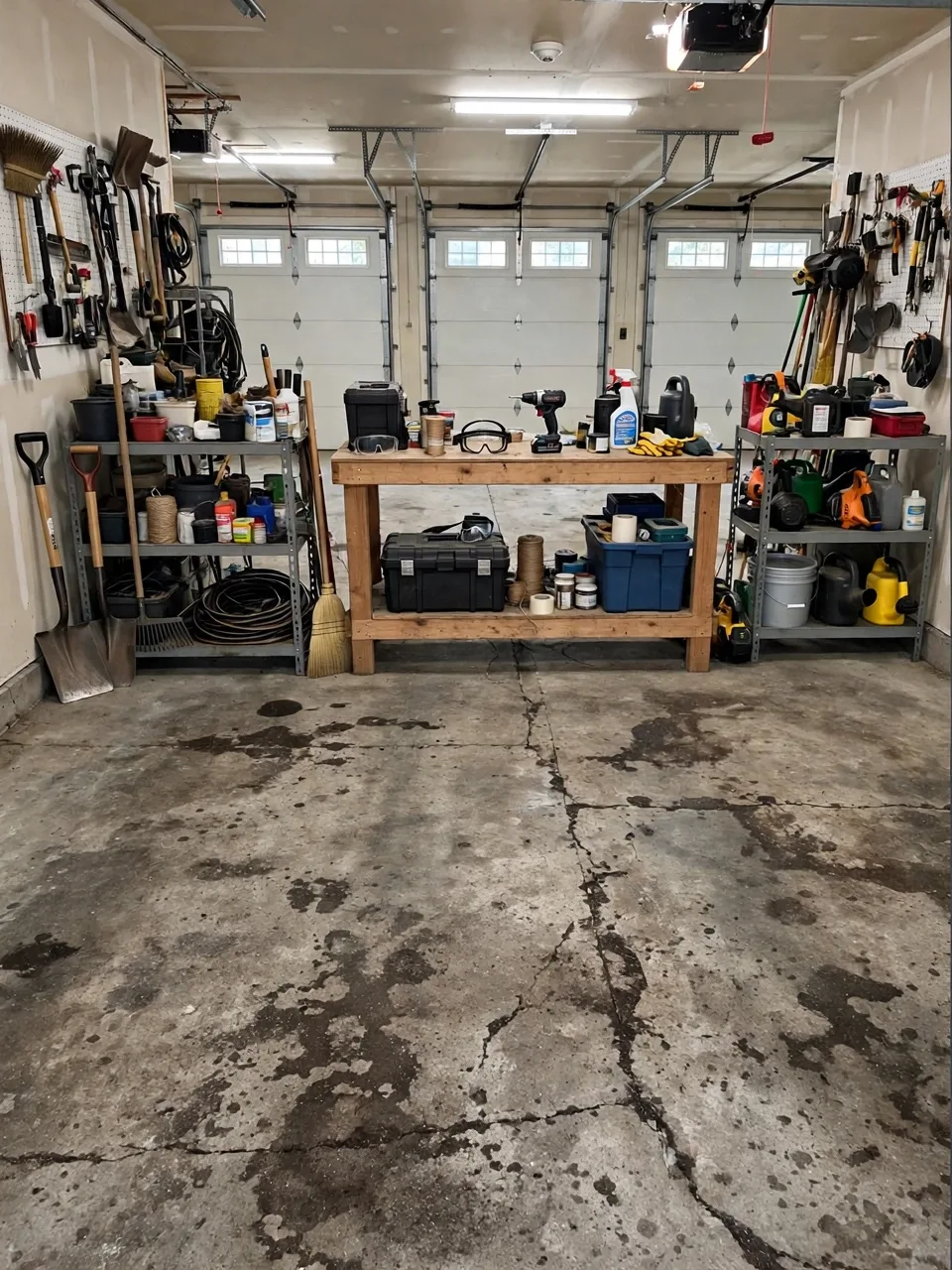
BEFOREAFTER
Lakevale Estates garage: bond tested sound across the field, worn topcoat prepared off and replaced, tire lanes reinforced.
Turnaround
2 days
Final Price
$1,980
Fit and Care After a Repair
A sound floor with a tired topcoat is the best bargain in our trade: two days of work returns it to full service for a fraction of replacement cost. Vienna’s many kit era garage floors are the borderline cases, and the bond test, not optimism, decides which side of the line each one falls on.
After a recoat, respect the cure windows as strictly as a new floor’s, because the fresh topcoat is doing the same chemistry. Then keep the records we give you with the house papers; the next owner, and the next repair conversation, will both be glad they exist.
We will also give you the replacement verdict when it is the truth. A floor whose bond has failed across most of its field cannot be saved economically, and hearing that from a diagnosis, with the test marks to show for it, is worth more than a hopeful recoat that peels by spring.
Timeline and Cure Windows
Most repairs and recoats complete in two working days: diagnosis confirmed and failed zones rebuilt on day one, full preparation and the fresh topcoat following. The recoated floor returns to foot traffic on the standard rhythm and to vehicles after the window stated at handover. Because the base system already exists, repair calendars stay short, which is much of the economic argument for saving a sound floor instead of replacing it.
Have Your Vienna Floor Diagnosed
Describe the damage and we will test the bond before anyone quotes a replacement.