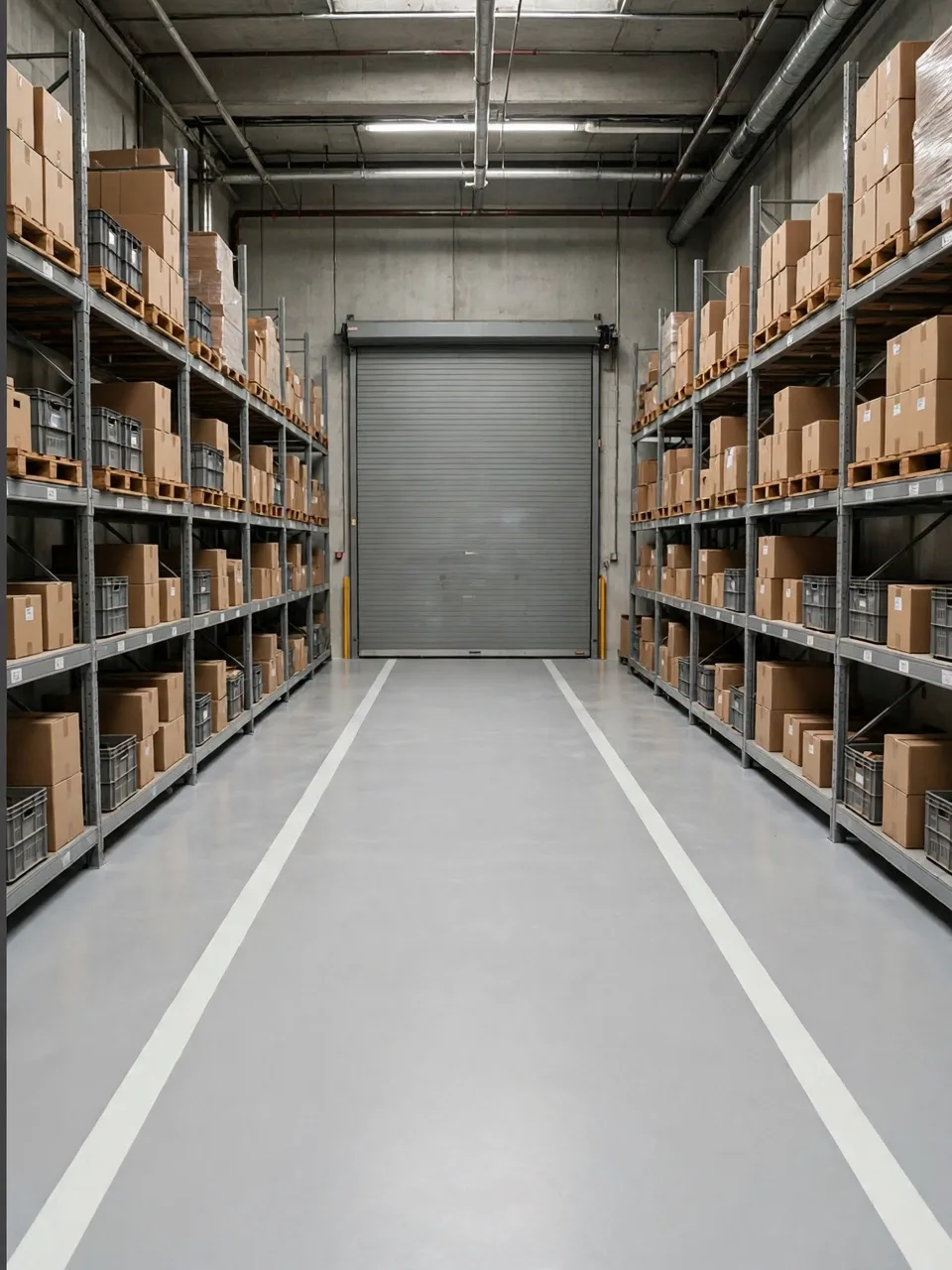
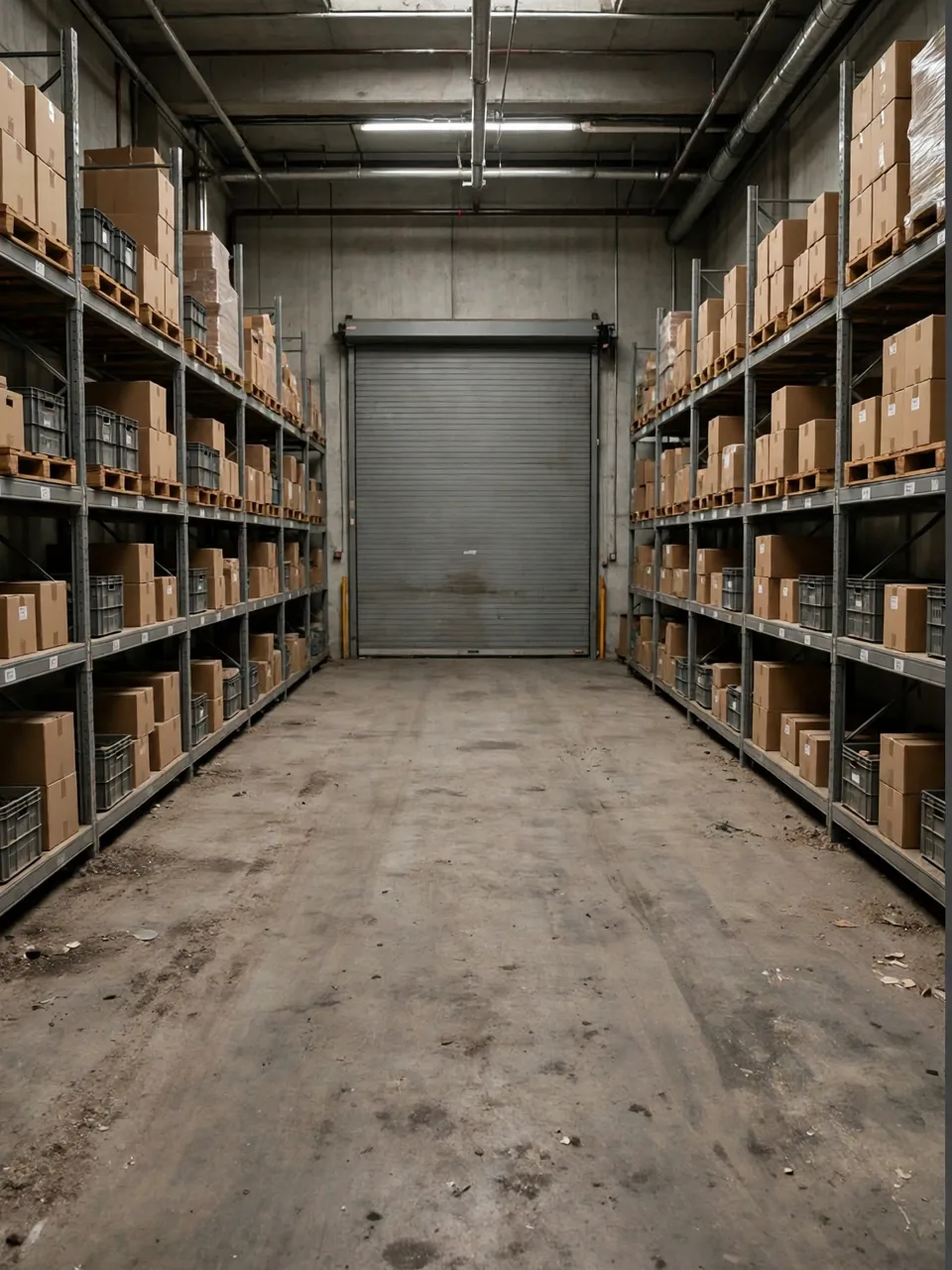
Warehouse epoxy flooring in Vienna is built joint first and lane by lane, for the service and storage operations toward Tysons whose floors carry forklifts, pallets, and the daily turning of loaded wheels.
Warehouse Epoxy Flooring in Vienna, VA by Vienna Epoxy Flooring Company
Warehouses Die at Their Joints
A warehouse floor rarely wears out evenly. It fails at the control joints where forklift wheels strike the same seams thousands of times, at the dock edge, and in the turning circle where every load pivots. Coating a field over dying joints buys a handsome floor with a short life.
Our warehouse scopes therefore start at the joints and the lanes. Saw cut damage is cleaned out and rebuilt with load rated material, spalls are repaired flush, and only then does the field get ground and coated. Markings are set into the system, not painted on top of it, so the lanes that direct traffic stay legible.
What a Warehouse Scope Includes
A Vienna warehouse installation is sequenced for traffic:
Joint survey and rebuild with load rated repair material
Degreasing and grinding sized to the building’s traffic
High build epoxy system across the working field
Aisle, walkway, and safety markings set into the finish
Bay by bay phasing that keeps part of the floor in service
The Joint Problem, Solved First
Our sequence on a warehouse floor never varies: survey the joints, rebuild what is broken, then grind and coat the field, with lane markings set into the system rather than painted over it. In the older service buildings around Vienna, that joint work is often the larger half of the honest scope, and it appears in the written figure as its own line, because hiding it inside a low number is how warehouses end up coated twice.
Recent Project: Warehouse Floor for a Vienna Service Operation
BEFOREAFTER
Service warehouse floor: joints rebuilt along the forklift lanes, high build system laid bay by bay, walkways set into the finish.
Turnaround
5 days
Final Price
$19,800
Running a Warehouse on a Sealed Floor
The operational gains are plain: dust stops migrating onto stored goods, spills are visible and lift cleanly, light reflects instead of disappearing into gray concrete, and marked lanes keep people and machines in their own geography. Phased work means the building never fully stops, which for most operators is the feature that matters first.
Bays reopen in sequence against the phasing plan
Set in markings outlast surface paint through turning traffic
A worn lane can be recoated without redoing the building
Autoscrub with neutral cleaner on your normal cycle, keep hard debris swept from the lanes, and report joint damage early. A joint repaired in its first season is an afternoon; the same joint in its third season is a lane closure, and the care sheet we leave says so in those terms.
Markings deserve the same seriousness as the field. Lines painted on a finished floor wear off first in exactly the lanes that need them most. Lines set into the system itself, in durable colors under the topcoat, stay legible through seasons of turning traffic, which is how a floor keeps directing people long after the install crew is forgotten.
Timeline and Cure Windows
Most Vienna warehouse work is phased across three to six days, the count driven by joint condition and total area. A bay returns to forklifts only after its full cure, while foot traffic and light pallet moves reopen sooner in sequence. The plan you approve carries each bay’s closing and reopening dates, and our foreman reports progress against it daily, so shipping is never surprised by coating.
Plan Your Warehouse Floor Bay by Bay
Send the form and we will walk the lanes before anyone talks finish.